
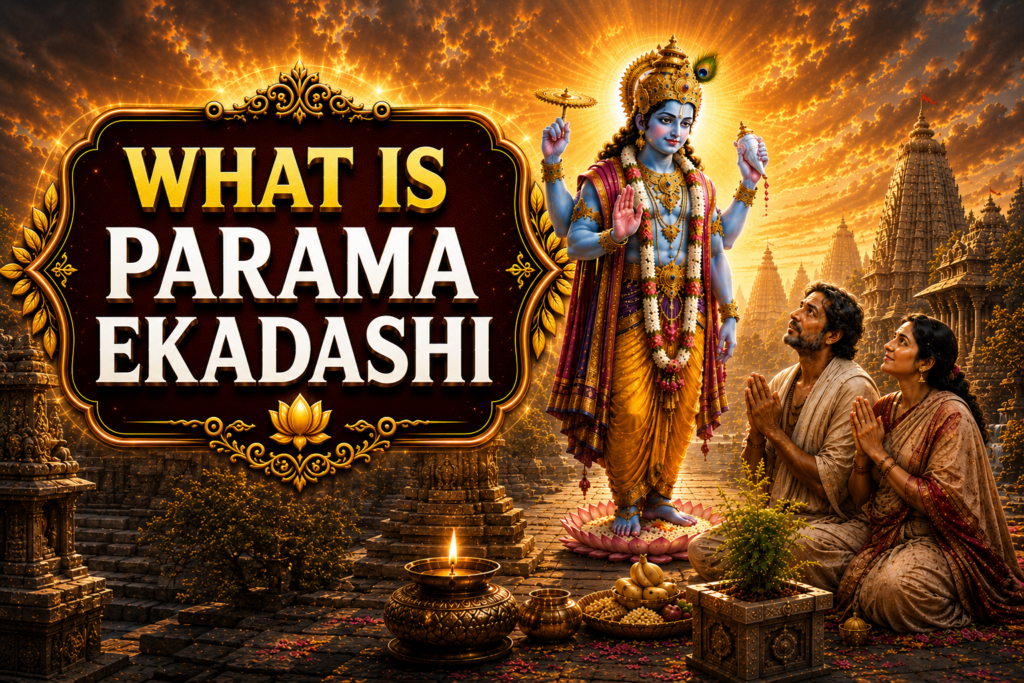
Parama Ekadashi is one of the most auspicious and spiritually rewarding Ekadashis observed in Sanatana Dharma. Falling during the Krishna Paksha of Adhika Masa, also known as Purushottama Masa, this sacred day is dedicated to Lord Vishnu. Since Adhika Masa occurs only once every 32 to 33 months, Parama Ekadashi is considered a rare opportunity for devotees to seek divine blessings and spiritual upliftment.
The word “Parama” means supreme, highest, or ultimate. True to its name, Parama Ekadashi is believed to grant immense spiritual merit, remove accumulated negative karma, and help devotees progress on the path of righteousness and devotion.
Parama Ekadashi 2026 Date and Timings
- Parama Ekadashi: Thursday, 11 June 2026
- Ekadashi Tithi Begins: 12:57 AM, 11 June 2026
- Ekadashi Tithi Ends: 10:36 PM, 11 June 2026
- Parana Time: 5:23 AM to 8:10 AM, 12 June 2026
Timings may vary according to location and regional Panchang.
What is Parama Ekadashi?
Parama Ekadashi falls on the Ekadashi Tithi of Krishna Paksha during Adhika Masa. It is also known by other names such as Parama Shuddha Ekadashi, Purushottami Ekadashi, and Kamala Ekadashi. Though the names differ, they refer to the same sacred observance.
According to Hindu scriptures, worshipping Lord Vishnu, fasting, chanting mantras, reading sacred texts, and performing charity on this day can bring prosperity, peace, and spiritual growth.
Why is Parama Ekadashi Important?
Parama Ekadashi is unique because it occurs during Purushottama Masa, the month specially dedicated to Lord Vishnu. Hindu traditions describe this month as especially powerful for spiritual practices.
Observing Parama Ekadashi is believed to:
- Remove accumulated sins
- Bring peace and positivity
- Improve spiritual awareness
- Reduce financial difficulties
- Strengthen devotion to Lord Vishnu
- Benefit ancestors through prayers and charity
- Help devotees move toward Moksha
Why Does Adhika Masa Occur?
The Hindu calendar follows the lunar cycle, which is approximately eleven days shorter than the solar year. To maintain alignment between lunar months and seasonal cycles, an additional month called Adhika Masa is added every few years.
According to Hindu tradition, this extra month was once neglected because it did not belong to any deity. Lord Vishnu blessed the month and accepted it as His own, giving it the name Purushottama Masa. Since then, the month has been regarded as highly sacred.
The Science Behind Ekadashi Fasting
Ancient Indian sages closely studied nature, the moon, and the human body. Since the human body is composed largely of water, it is believed that lunar phases can influence physical and mental states.
Digestive Rest
Fasting gives the digestive system a break and allows the body to use energy for repair and maintenance rather than constant digestion.
Mental Focus
A lighter diet often helps improve concentration, mindfulness, and emotional balance.
Self-Control and Discipline
Observing a fast develops willpower and encourages conscious living.
Detoxification
Many people believe periodic fasting supports the body’s natural cleansing mechanisms and metabolic balance.
Spiritual Awareness
Reducing attachment to food and worldly pleasures allows devotees to focus more deeply on prayer, meditation, and self-reflection.
Parama Ekadashi Vrat Katha
The Parama Ekadashi story is narrated by Lord Krishna to King Yudhishthira.
In ancient times, there lived a poor Brahmin named Sumedha and his virtuous wife Pavitra in the city of Kampilya. Although they faced severe poverty, they never abandoned their faith, hospitality, or devotion.
One day, Sage Kaundinya visited their home. Impressed by their sincerity and devotion, he advised them to observe Parama Ekadashi during Purushottama Masa.
Following his instructions with complete faith, the couple observed the vrat, worshipped Lord Vishnu, and spent the day in prayer and devotion. Pleased by their sincerity, Lord Vishnu blessed them with prosperity, happiness, and relief from their hardships.
This story teaches that unwavering faith and devotion can transform even the most difficult circumstances.
Story of Kubera and Parama Ekadashi
According to traditional beliefs, Kubera, the lord of wealth, observed Parama Ekadashi with great devotion and dedication to Lord Vishnu.
Impressed by his spiritual discipline and sincere worship, Lord Vishnu granted him divine blessings. Kubera was eventually appointed as the treasurer of the celestial gods and became a symbol of prosperity and abundance.
Because of this story, many devotees observe Parama Ekadashi seeking financial stability, success, and divine grace.
Story of King Harishchandra
King Harishchandra is remembered as one of the greatest examples of truth and righteousness in Hindu tradition.
Due to a series of divine tests, he lost his kingdom, wealth, and family comforts. Despite immense suffering, he remained steadfast in truth and dharma.
According to traditional accounts, King Harishchandra observed Parama Ekadashi with deep devotion and prayed sincerely to Lord Vishnu. Through the power of the vrat and his unwavering faith, his difficulties gradually came to an end.
He eventually regained his kingdom, reunited with his family, and received divine blessings. His story reminds us that honesty, patience, and devotion ultimately lead to victory over adversity.
Parama Ekadashi 2026: Complete Fasting Guide, Rules, Benefits, and Parana Time
What is Parama Ekadashi?
Parama Ekadashi is one of the most sacred Ekadashis dedicated to Lord Vishnu. It falls during the Krishna Paksha (waning phase of the Moon) and is highly praised in Hindu scriptures. Observing this vrat with devotion is believed to remove sins, bring spiritual purification, and attract divine blessings, prosperity, and peace.
This guide explains the complete procedure for observing Parama Ekadashi from Dashami preparation to Dwadashi Parana.
Dashami Tithi (10 June) – Preparation for Ekadashi
The observance of Parama Ekadashi begins on Dashami, the day before Ekadashi.
What to Do on Dashami
- Eat a simple and sattvic meal.
- Preferably eat only one meal in the evening.
- Avoid overeating.
- Prepare mentally and spiritually for the fast.
- Spend time in prayer and remembrance of Lord Vishnu.
What to Avoid
- Heavy and tamasic foods.
- Excessive indulgence in food.
- Anger, arguments, and negative thoughts.
Parama Ekadashi (11 June) – Fasting and Worship
On Ekadashi, devotees should wake up during Brahma Muhurta, approximately one hour before sunrise.
Morning Rituals
- Take a holy bath.
- Wear clean clothes.
- Worship Lord Vishnu and Tulsi Devi.
- Offer flowers, incense, and lamps.
- Read the Bhagavad Gita, Vishnu Sahasranama, or other sacred scriptures.
- Chant the holy names of the Lord.
Sankalpa (Sacred Vow)
After worship, take a sincere vow to observe the Parama Ekadashi fast according to your health and capacity.
Types of Ekadashi Fasting
1. Nirjala Upavasa
Complete fasting without food and water.
2. Sajala Upavasa
Fasting while consuming only water.
3. Phalahara Upavasa
Fasting while consuming fruits and water.
4. Partial Fasting
Avoid grains and consume approved fasting foods such as:
- Sabudana (Sago)
- Fruits
- Potatoes
- Sweet potatoes
- Milk
- Nuts
- Jaggery
- Other sattvic fasting foods
Choose the fasting method that best suits your health and physical condition.
Foods to Avoid on Ekadashi
Devotees should strictly avoid:
- Rice
- Wheat
- Barley
- Lentils and pulses
- Grain-based foods
- Meat and seafood
- Eggs
- Onion
- Garlic
- Alcohol and intoxicants
- Tea and coffee (preferably avoided)
Spiritual Activities Recommended on Ekadashi
The true essence of Ekadashi lies in devotion and spiritual practice.
Recommended Practices
- Chanting the Hare Krishna Maha Mantra
- Reading sacred scriptures
- Listening to devotional discourses
- Meditation
- Charity and helping those in need
- Singing bhajans and kirtans
- Remembering Lord Vishnu throughout the day
Activities to Avoid
- Gossip and idle talk
- Criticizing others
- Gambling
- Anger and quarrels
- Excessive sleeping
- Material distraction
Dwadashi Tithi (12 June) – Parana (Breaking the Fast)
Dwadashi is the day when the Ekadashi fast is completed.
Morning Worship
- Wake up during Brahma Muhurta.
- Worship Lord Vishnu and Tulsi Devi.
- Prepare sattvic food and offer it to the Lord.
Offerings Before Parana
As an act of compassion and gratitude, offer food to:
- Cows
- Birds
- Dogs
- Ants
- Other living beings
This practice is considered highly meritorious.
Parama Ekadashi Parana Time
Parana Time:
5:53 AM to 10:11 AM
The fast should be broken within this prescribed period after offering food to Lord Vishnu and receiving it as prasadam.
Spiritual Benefits of Observing Parama Ekadashi
According to Hindu scriptures, sincere observance of Parama Ekadashi may:
- Purify the mind and heart
- Remove accumulated sins
- Increase devotion to Lord Vishnu
- Bring peace, prosperity, and happiness
- Enhance self-discipline and spiritual growth
- Bestow divine blessings upon the devotee and family
Conclusion
Parama Ekadashi is a powerful opportunity to strengthen one’s spiritual life through fasting, prayer, self-discipline, and devotion to Lord Vishnu. Whether you observe Nirjala, Sajala, Phalahara, or Partial Fasting, the most important aspect is sincerity, faith, and remembrance of God.
May Lord Vishnu bless all devotees with health, happiness, prosperity, and spiritual advancement on this sacred Parama Ekadashi.