
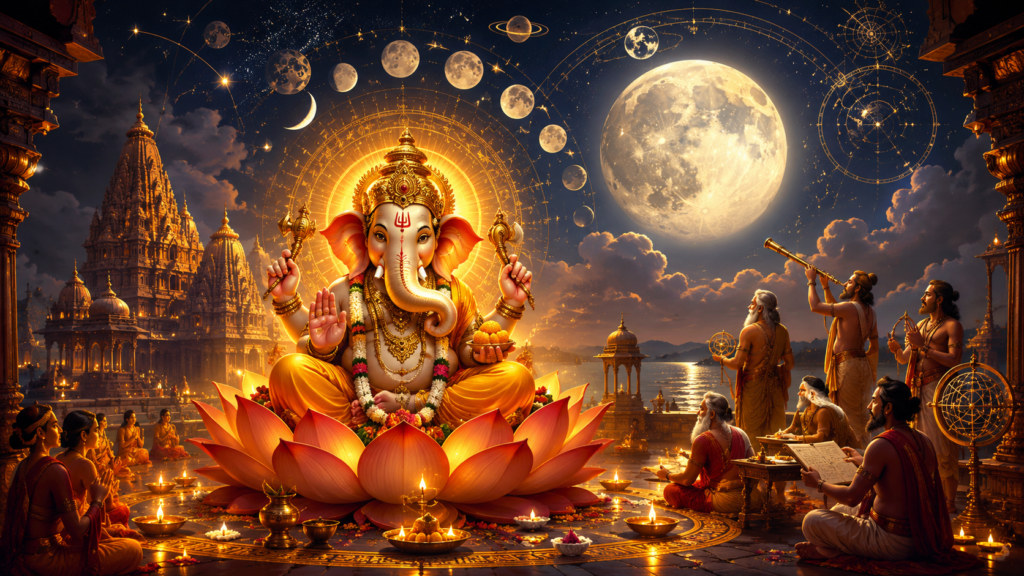
Vibhuvana Sankashti Chaturthi is one of the rarest and most spiritually significant observances dedicated to Lord Ganesha. It occurs during Adhika Maas (Purushottama Maas), an extra lunar month that appears approximately once every three years in the Hindu calendar. Because of its occurrence during this sacred month, Vibhuvana Sankashti Chaturthi is considered especially powerful for removing obstacles, seeking divine blessings, and promoting spiritual growth.
Vibhuvana Sankashti Chaturthi 2026 Date and Timings
In 2026, many devotees were confused about whether Vibhuvana Sankashti Chaturthi should be observed on June 3 or June 4 because the Chaturthi Tithi overlaps both dates.
According to the Panchang:
- Chaturthi Tithi Begins: June 3, 2026, at 9:21 PM
- Chaturthi Tithi Ends: June 4, 2026, at 11:30 PM
- Moonrise (Chandrodaya): June 3, 2026, at 9:54 PM
Since Sankashti Chaturthi fasting is observed on the day when the Chaturthi Tithi prevails during moonrise, most Panchangs recommend observing the vrat on Wednesday, June 3, 2026.
Why Was There Confusion About the Date?
Unlike the Gregorian calendar, which follows fixed dates, Hindu festivals are determined using the lunar calendar. A Tithi is calculated based on the angular distance between the Sun and the Moon rather than a 24-hour day.
As a result, a Tithi can begin or end at any time during the day or night. When a Tithi spans two calendar dates, confusion naturally arises regarding the correct day for observance.
For Sankashti Chaturthi, moonrise plays a crucial role because devotees break their fast only after sighting the Moon and offering prayers. Since Chaturthi Tithi was present during moonrise on June 3, that date is generally accepted as the correct day for observing the vrat.
📚 History & Science Behind Indian Festivals Combo ₹699 → ₹379 Only Learn the stories, science, Tithis, Masas, and traditions behind Indian festivals.
Use the Coupon code ADHIKA026
What is Sankashti Chaturthi?
The word “Sankashti” means “freedom from difficulties” or “deliverance from troubles.” Sankashti Chaturthi is observed every month on the fourth day of Krishna Paksha, the waning phase of the Moon.
This day is dedicated to Lord Ganesha, who is revered as the remover of obstacles, the lord of wisdom, and the giver of prosperity. Devotees observe a fast, chant prayers, listen to the Sankashti Vrat Katha, and worship Lord Ganesha to seek blessings for success, happiness, and protection.
Why is Vibhuvana Sankashti Chaturthi Special?
Vibhuvana Sankashti Chaturthi is unique because it occurs during Adhika Maas, a sacred month that appears only once every three years. This rarity makes the observance highly auspicious.
Many devotees believe that prayers offered on this day carry special spiritual significance. Worshipping Lord Ganesha during Adhika Maas is believed to remove obstacles, fulfill wishes, and help devotees progress on their spiritual journey.
History Behind Adhika Maas
One of the most fascinating aspects of the Hindu calendar is its scientific accuracy.
A lunar year consists of approximately 354 days, while a solar year consists of approximately 365 days. This creates a difference of about 11 days each year. Without correction, Hindu festivals would gradually shift away from their traditional seasons.
To solve this problem, ancient Indian astronomers introduced Adhika Maas, an additional month inserted approximately every three years. This adjustment keeps the lunar calendar synchronized with the solar year.
This remarkable system demonstrates the advanced astronomical knowledge of ancient India, developed thousands of years before modern technology.
According to Hindu scriptures, Adhika Maas was once considered neglected because it lacked special festivals and significance. Lord Vishnu blessed the month and declared it Purushottama Maas, giving it a sacred status and making it one of the most spiritually beneficial months in the Hindu calendar.
History Behind Adhika Maas
1. Astronomical Knowledge
The observance highlights the sophisticated astronomical calculations used in the Hindu calendar. The concept of Adhika Maas reflects an accurate understanding of the differences between lunar and solar cycles.
2. Connection with Lunar Cycles
Sankashti Chaturthi is closely linked to the phases of the Moon. Ancient Indian traditions encouraged observing celestial events, helping communities maintain awareness of natural cycles and seasonal changes.
3. Benefits of Fasting
Modern research suggests that periodic fasting may support digestive health, improve metabolic function, and encourage self-discipline. While the primary purpose of the vrat is spiritual, fasting can also provide physical and mental benefits when practiced responsibly.
4. Mental and Emotional Well-being
Prayer, meditation, mantra chanting, and devotional practices help calm the mind, reduce stress, and improve concentration. Festivals often create opportunities for reflection, gratitude, and inner growth.
Use the Coupon code ADHIKA026
Puja Vidhi (Rituals)
Devotees typically follow these rituals:
- Wake up early and take a sacred bath.
- Clean the puja area and install an idol or image of Lord Ganesha.
- Offer flowers, durva grass, fruits, coconut, and modaks.
- Chant Ganesha mantras and recite the Sankashti Vrat Katha.
- Observe a fast throughout the day.
- Offer prayers to the Moon after moonrise.
- Complete the puja and break the fast.
Lessons for Children and Families
Vibhuvana Sankashti Chaturthi teaches important values:
- Faith and perseverance help overcome challenges.
- Discipline strengthens character.
- Gratitude and devotion bring peace of mind.
- Ancient Indian traditions often combine spirituality with scientific understanding.
- Cultural knowledge should be preserved and passed on to future generations.
Conclusion
Vibhuvana Sankashti Chaturthi 2026 is a rare and sacred observance that beautifully combines devotion, astronomy, tradition, and self-discipline. The date confusion surrounding June 3 and June 4 highlights the unique way Hindu festivals are calculated using lunar movements rather than fixed calendar dates.
By understanding both the history and scientific principles behind festivals such as Sankashti Chaturthi, we gain a deeper appreciation of India’s rich cultural heritage and the remarkable wisdom embedded within ancient traditions. This special observance reminds us that Hindu festivals are not merely celebrations but also reflections of profound astronomical knowledge, spiritual practices, and timeless life lessons.